Діафрагмальне дихання для зменшення тривожності
Дихання черевом: Техніка зменшення тривоги та стресу
Дихання черевом, також відоме як діафрагмальне або животне дихання, - це техніка, яка може значно допомогти зменшити тривогу та стрес. Цей метод сприяє глибшому, більш розслабленому диханню, що контрастує з поверхневим, швидким диханням, яке часто асоціюється з тривогою.
Переваги дихання черевом
-
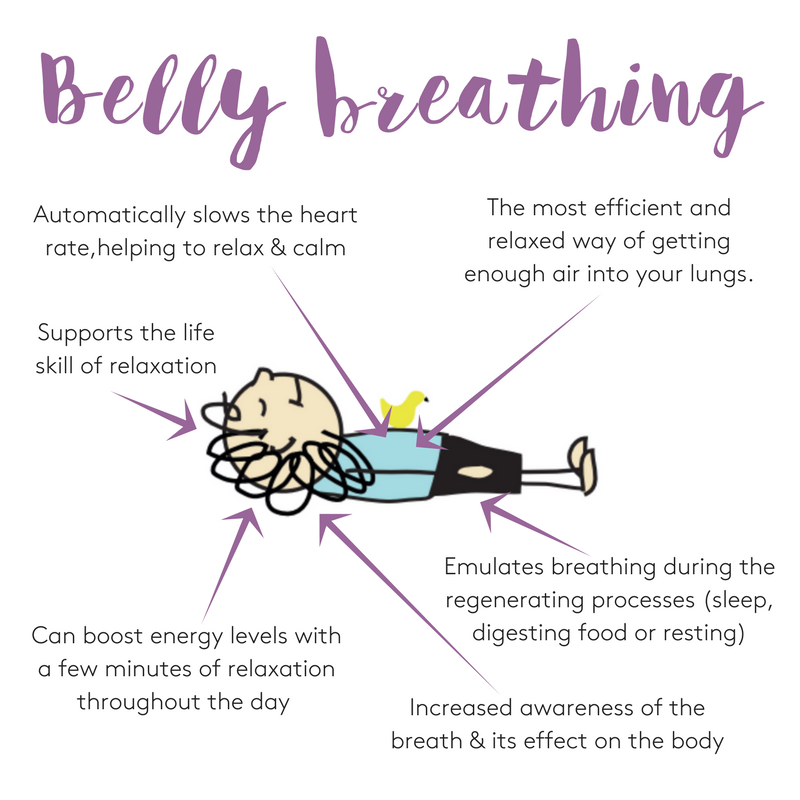
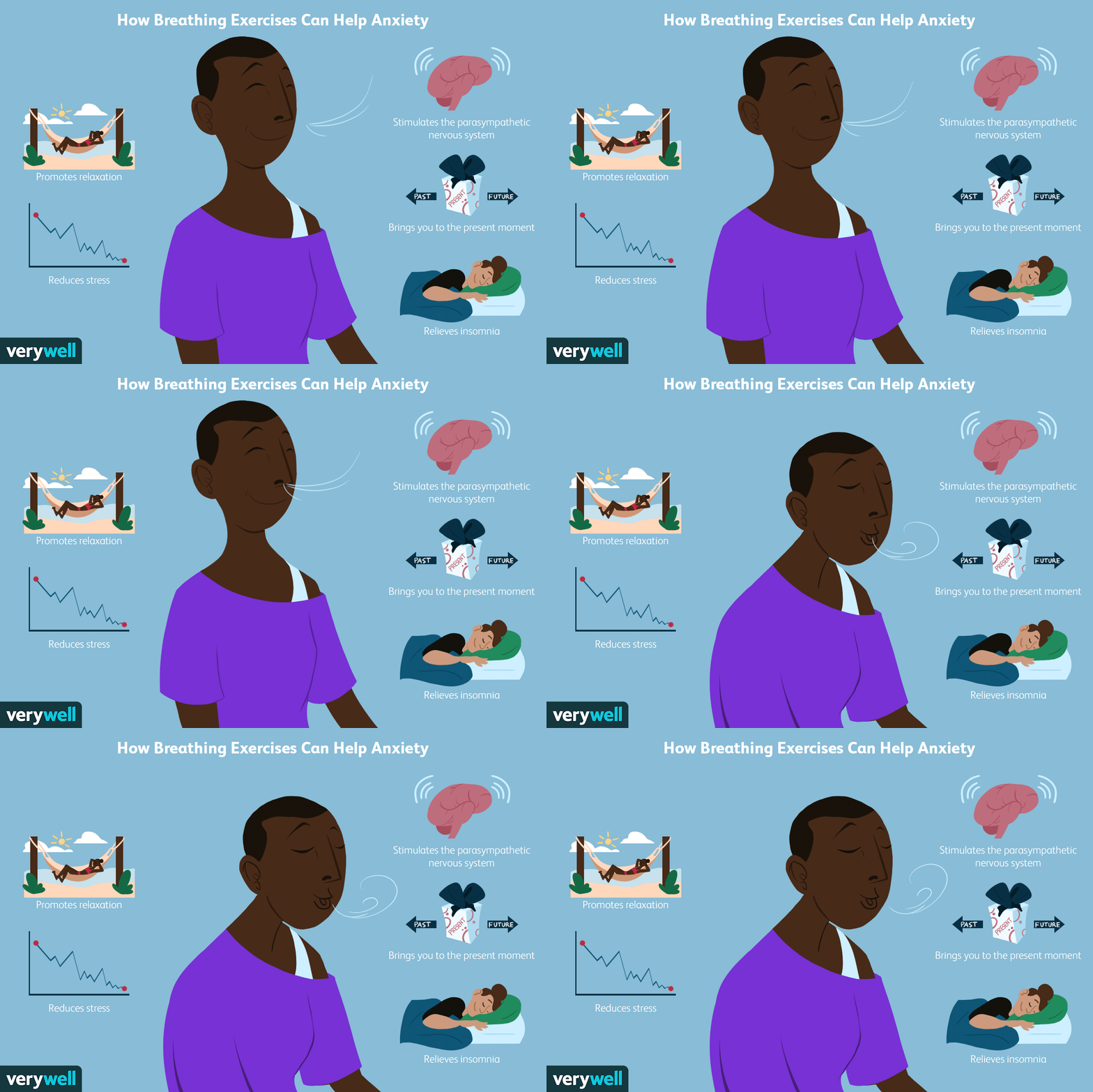
Активує реакцію розслаблення: Дихання черевом стимулює вагусовий нерв, який допомагає активувати реакцію розслаблення організму. Це може призвести до зниження частоти серцевих скорочень та кров’яного тиску, в кінцевому рахунку знижуючи рівень стресу.
-
Зменшує симптоми тривоги: Заняття диханням черевом може допомогти перервати реакцію “бій або біг”, яку багато людей відчувають під час стресових ситуацій. Концентруючись на глибокому, контрольованому диханні, люди можуть ефективніше керувати своєю тривогою.
-
Покращує усвідомлення дихальних шаблонів: Практика дихання черевом допомагає людям стати більш усвідомленими щодо своїх дихальних шаблонів, дозволяючи їм виявляти, коли вони дихають поверхнево, та виправляти це. Це усвідомлення може бути особливо корисним у ситуаціях високої тривоги.
Як практикувати дихання черевом
Щоб ефективно практикувати дихання черевом, слідуйте цим крокам:
-
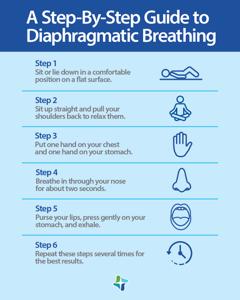
Почніть з комфорту: Сідайте на стілець з підтримкою спини або лягайте в комфортній позиції. Розстібніть будь-який стискаючий одяг.
-
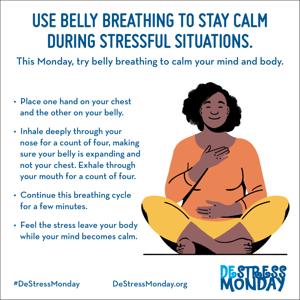
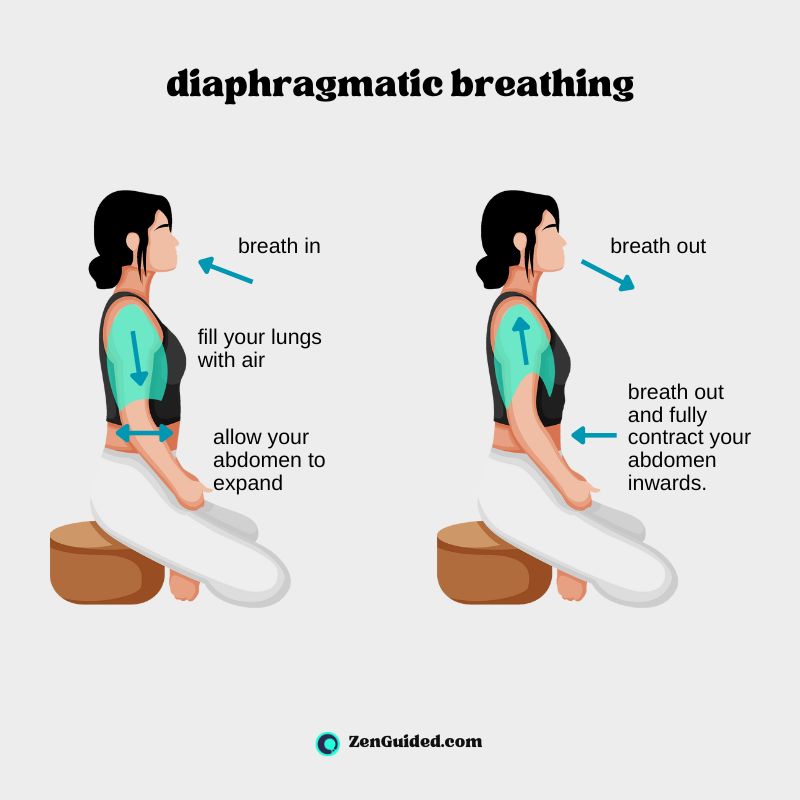
Розташування рук: Покладіть одну руку на живіт (нижче реберної дуги) та іншу на груди. Це допоможе вам відчути різницю між диханням черевом та грудей.
-
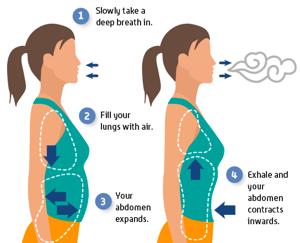
Глибоко вдихайте: Повільно вдихайте носом, дозволяючи вашому животу підніматися, коли ви наповнюєте легені повітрям. Сконцентруйтеся на розширенні живота, а не грудей.
-
Повільно видихайте: Повільно видихайте через рот, відчуваючи, як ваш живіт опускається. Прагніть до повільного, контрольованого видиху.
-
Повторюйте: Продовжуйте цей процес протягом кількох хвилин, дотримуючись стабільного ритму. Поширена техніка - вдихати на рахунок чотирьох, тримати момент, а потім видихати на рахунок чотирьох.
Включення дихання черевом у повсякденне життя
Щоб максимізувати переваги дихання черевом, рекомендується регулярно практикувати його протягом дня. Прагніть до коротких сеансів трьох до п’яти хвилин, кілька разів на день, особливо під час моментів стресу або тривоги. З часом ця техніка може стати природною реакцією на стрес, допомагаючи згладити реакцію на тривожні подразники.
Підсумовуючи, дихання черевом - це простий, але потужний інструмент для управління тривогою та стресом. Сприяючи розслабленню та усвідомленню дихальних шаблонів, люди можуть покращити своє загальне психічне здоров’я та стійкість проти ситуацій, що викликають тривогу.
Картинки

Джерела
- Ease anxiety and stress: Take a (belly) breather - Harvard Health - health.harvard
- Controlled or abdominal breathing as an anxiety technique - comorbidityguidelines.org
- 1. Ease anxiety and stress: Take a (belly) breather - Harvard Health - health.harvard
- 2. Controlled or abdominal breathing as an anxiety technique - comorbidityguidelines.org
- 4. Breathing exercises for stress - NHS - nhs
- 5. Feeling anxious? Try this breathing technique - Michigan Medicine - michiganmedicine
- 7. Diaphragmatic Breathing Exercises & Benefits - Cleveland Clinic - my.clevelandclinic
- 8. Need a Breather? Try These 9 Breathing Exercises to Relieve Anxiety - verywellmind
English version
Abdominal Breathing: A Technique for Alleviating Anxiety and Stress
Abdominal breathing, also known as diaphragmatic or belly breathing, is a technique that can significantly help alleviate anxiety and stress. This method encourages deeper, more relaxed breathing, which contrasts with the shallow, rapid breathing often associated with anxiety.
Benefits of Abdominal Breathing
-
Activates the Relaxation Response: Abdominal breathing stimulates the vagus nerve, which helps activate the body’s relaxation response. This can lead to a reduction in heart rate and blood pressure, ultimately lowering stress levels.
-
Reduces Anxiety Symptoms: Engaging in belly breathing can help interrupt the fight-or-flight response that many people experience during stressful situations. By focusing on deep, controlled breaths, individuals can manage their anxiety more effectively.
-
Improves Awareness of Breathing Patterns: Practicing abdominal breathing helps individuals become more aware of their breathing patterns, allowing them to identify when they are breathing shallowly and to correct it. This awareness can be particularly beneficial in high-anxiety situations.
How to Practice Abdominal Breathing
To effectively practice abdominal breathing, follow these steps:
-
Get Comfortable: Sit in a chair with your back supported or lie down in a comfortable position. Loosen any restrictive clothing.
-
Hand Placement: Place one hand on your abdomen (below your rib cage) and the other on your chest. This will help you feel the difference between abdominal and chest breathing.
-
Inhale Deeply: Breathe in slowly through your nose, allowing your abdomen to rise as you fill your lungs with air. Focus on expanding your belly rather than your chest.
-
Exhale Slowly: Exhale gently through your mouth, feeling your abdomen fall. Aim for a slow, controlled exhale.
-
Repeat: Continue this process for several minutes, maintaining a steady rhythm. A common technique is to inhale for a count of four, hold for a moment, and then exhale for a count of four.
Incorporating Abdominal Breathing into Daily Life
To maximize the benefits of abdominal breathing, it is recommended to practice it regularly throughout the day. Aim for short sessions of three to five minutes, several times a day, especially during moments of stress or anxiety. Over time, this technique can become a natural response to stress, helping to buffer against anxiety triggers.
In summary, abdominal breathing is a simple yet powerful tool for managing anxiety and stress. By promoting relaxation and awareness of breathing patterns, individuals can improve their overall mental health and resilience against anxiety-inducing situations.